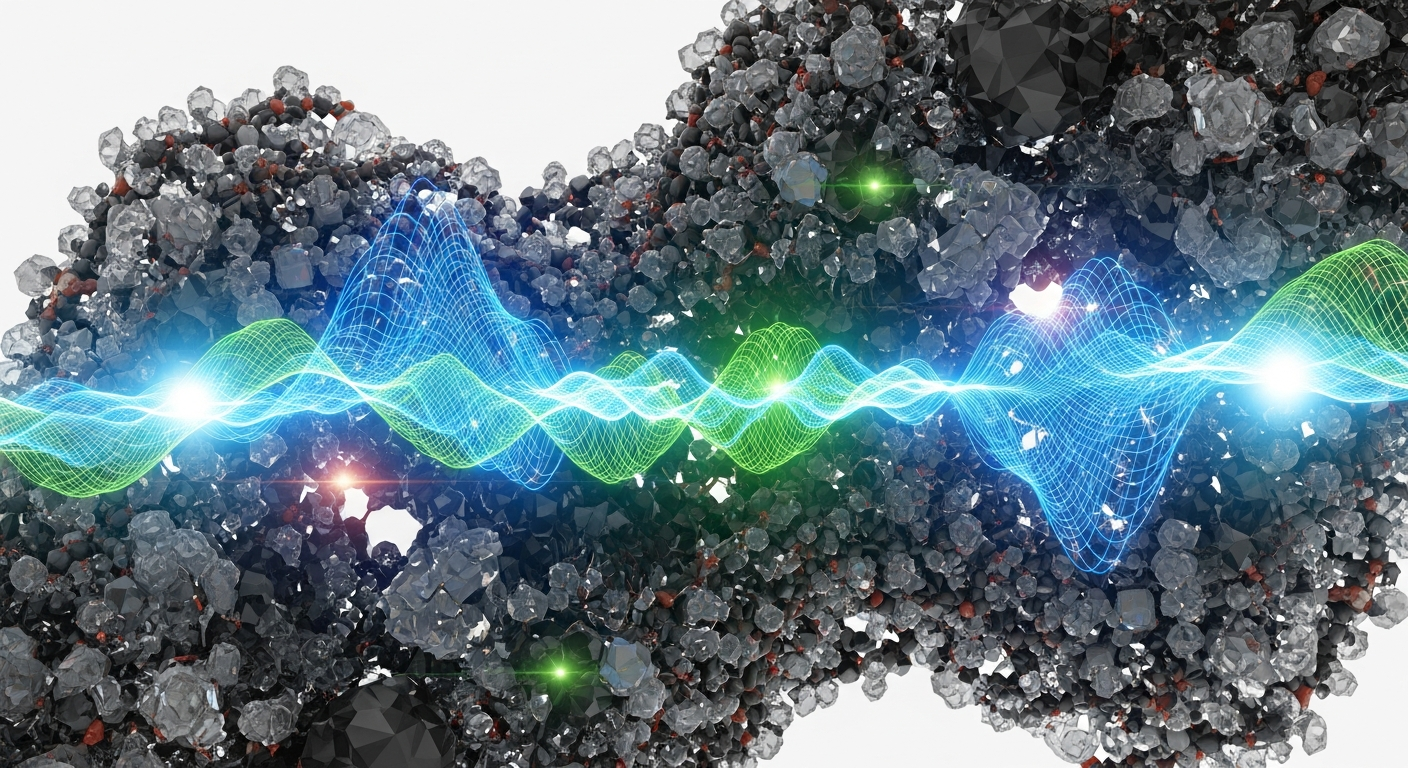
Quantum Coherence: The Mysterious Symphony in Biological Systems
In the chaotic dance of life, where cells multiply, proteins fold, and enzymes catalyze reactions at breakneck speed, an invisible conductor might be at work—quantum coherence. This seemingly esoteric phenomenon, traditionally relegated to the realms of quantum physics and material science, is beginning to reveal its hand in the intricate symphony of biological processes. As researchers delve deeper into the quantum underpinnings of life, a tantalizing question arises: could the whisper of quantum coherence be the secret to life's extraordinary efficiency?
Quantum coherence refers to the delicate state where particles such as electrons simultaneously occupy multiple states, maintaining a type of synchronized harmony. In biological systems, this coherence could play a pivotal role in processes such as photosynthesis, enzymatic reactions, and even avian navigation. The exploration of quantum coherence in biology not only challenges our conventional understanding but also promises revolutionary applications ranging from quantum computing to new paradigms in medicine and biotechnology.
The Symbiotic Dance of Biology and Quantum Physics
To appreciate the impact of quantum coherence in biological systems, one must first understand the basics of quantum mechanics. At its core, quantum mechanics describes the behavior of matter at the smallest scales, where particles can exist in multiple states and locations simultaneously—an idea known as superposition. When these particles maintain a fixed phase relationship, they exhibit coherence, allowing them to act collectively rather than as isolated entities.
For decades, the notion that such coherent quantum states could persist in the warm, wet, and noisy environment of living cells seemed improbable. Yet, groundbreaking research has shown that Nature has evolved mechanisms to harness these quantum effects. For instance, the efficiency of photosynthesis in plants, where photons are captured and converted into chemical energy, has been found to exploit quantum coherence. Fenna-Matthews-Olson (FMO) complexes, crucial in the photosynthetic process, exhibit wave-like properties that suggest the presence of quantum coherence, allowing energy to be transferred seamlessly and with minimal loss.
Quantum Coherence in Photosynthesis: Nature’s Quantum Computer
In photosynthesis, the energy from sunlight is absorbed by chlorophyll and other pigments, creating excitons—quantum particles of energy. These excitons must traverse a complex network of proteins to reach the reaction center, where they are transformed into chemical energy. Remarkably, this energy transfer appears optimized by quantum coherence. Studies using two-dimensional electronic spectroscopy have detected oscillatory patterns indicative of quantum coherence, suggesting that excitons follow multiple paths simultaneously, choosing the most efficient route.
Quantum coherence thus not only enhances the speed of energy transfer but also its precision, akin to a quantum computer evaluating multiple solutions at once and selecting the optimal one. This insight opens the door to innovative approaches in solar energy technology, where mimicking nature’s quantum tricks could vastly improve the efficiency of photovoltaic cells.
Avian Navigation and Quantum Entanglement
The navigation skills of migratory birds are yet another baffling phenomenon potentially explained by quantum biology. Birds such as the European robin are believed to possess a radical pair of molecules within their retinas, sensitive to Earth's magnetic fields. The coherence and entanglement of electron spins in these radical pairs might allow birds to “see” magnetic fields, thus guiding their migratory paths with uncanny precision.
This hypothesis not only underscores the potential ubiquity of quantum coherence in biological systems but also hints at applications that are as captivating as they are challenging—developing new navigation technologies inspired by this natural phenomenon.
Quantum Coherence in Human Biology
The implications of quantum coherence extend beyond the plant and animal kingdoms into human biology. Enzymatic reactions, the cornerstone of metabolism and cellular function, may also be influenced by quantum effects. For instance, the enzyme tunneling process, where particles such as protons or electrons pass through energy barriers, is a fundamentally quantum event. Understanding these processes could revolutionize drug design by providing insights into how to enhance or inhibit specific biochemical pathways with unprecedented precision.
Moreover, the study of melanin’s potential role in quantum biology is emerging as a provocative field of research. Melanin, known for its pigmentary and protective functions, might also play a role in energy transduction processes at the quantum level, reflecting a broader trend of nature leveraging quantum phenomena to enhance life’s resilience and adaptability.
The Future of Quantum Biology
While the study of quantum coherence in biological systems is still in its infancy, its potential implications are vast. From revolutionizing energy technology to pioneering new medical treatments, the exploration of quantum biology is poised to redefine our understanding of life’s fundamental processes. As researchers continue to untangle the quantum threads woven into the fabric of life, the boundaries between biology and quantum physics are blurring, revealing a tapestry more intricate and interconnected than once imagined.
Key Takeaways
- Quantum coherence allows particles to exist in multiple states, potentially enhancing the efficiency of biological processes.
- In photosynthesis, quantum coherence optimizes energy transfer, informing new approaches to solar energy technology.
- Avian migration may be guided by quantum entanglement, revealing new insights into natural navigation systems.
- Understanding quantum effects in enzymatic reactions could lead to breakthroughs in drug design and metabolic studies.
- The role of melanin and other biomolecules in quantum processes is an exciting frontier in quantum biology research.
References
- Lambert, N., Chen, Y.-N., Cheng, Y.-C., Li, C.-M., Chen, G.-Y., & Nori, F. (2013). Quantum biology. Nature Physics, 9(1), 10-18.
- Huelga, S. F., & Plenio, M. B. (2013). Vibrations, quanta and biology. Contemporary Physics, 54(4), 181-207.
- Ritz, T., Adem, S., & Schulten, K. (2000). A model for photoreceptor-based magnetoreception in birds. Biophysical Journal, 78(2), 707-718.
- Collini, E., Wong, C. Y., Wilk, K. E., Curmi, P. M., Brumer, P., & Scholes, G. D. (2010). Coherently wired light-harvesting in photosynthetic marine algae at ambient temperature. Nature, 463(7281), 644-647.