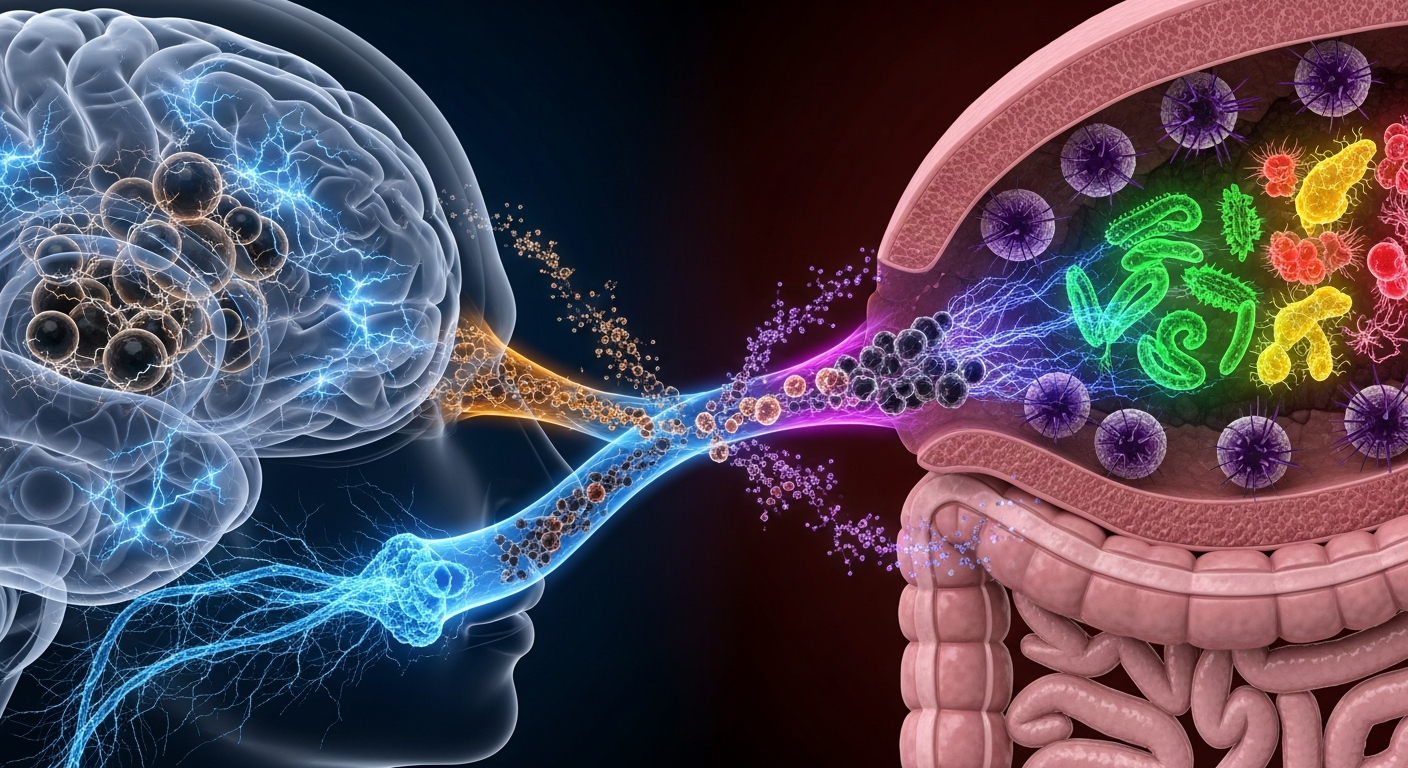
Melanin's role extends far beyond skin and eye color, operating as a functional biopolymer at the intersection of bioenergetics, neurochemistry, and environmental adaptation. New research illuminates a previously overlooked domain for this remarkable molecule: the intricate biochemical environment of the human gut. The discovery that melanin-producing cells are native residents of the enteric nervous system, coupled with neuromelanin’s critical role in the brain, forces a re-evaluation of melanin as a key intermediary in the gut-brain axis, orchestrated by the metabolic activity of our microbiome.
When we consider the pigment melanin, our thoughts typically turn to its role as the primary determinant of skin color and a frontline defense against ultraviolet radiation. This photoprotective function, while essential, represents only a fraction of melanin's biological portfolio. A more complete picture emerges when we look deeper, into the dark, anoxic environment of the human gut and the dopamine-rich regions of the midbrain. Here, melanin and its precursors are not responding to photons, but to the chemical signals of metabolism and neural activity. The presence of melanocytes—specialized melanin-producing cells—within the gut wall is a profound and underexplored finding. It suggests that this ancient biopolymer, known for its unique semiconductor and free radical-scavenging properties, is a fundamental component of the body’s internal regulatory systems, linking our "second brain" in the gut directly to the health of our central nervous system.
The Enteric Melanin Network
The enteric nervous system (ENS) is an extensive and complex network of neurons and glial cells embedded in the walls of the gastrointestinal tract, capable of operating independently from the central nervous system. It governs gut motility, secretion, and blood flow with remarkable autonomy. The discovery of a population of resident melanocytes within this system, as detailed by researchers like DePelecyn et al., raises immediate questions about their function. These are not misplaced cells from embryonic development; they form a coherent network, suggesting a specific and integrated role.
Current evidence points toward several potential functions for these enteric melanocytes. One leading hypothesis is that they act as a component of the gut's innate immune system and mucosal barrier. Melanin is a potent antioxidant and redox-active polymer, capable of neutralizing reactive oxygen species (ROS) generated during metabolic and inflammatory processes. By situating a distributed network of these powerful cytoprotective cells throughout the gut lining, the body may have evolved a localized defense system to buffer against oxidative stress and microbial toxins. Furthermore, some studies suggest that these cells participate in immune surveillance, interacting with enteric neurons and immune cells to modulate inflammatory responses. Their role is not merely passive; it appears to be an active, dynamic contribution to maintaining intestinal homeostasis. This local function, however, is only one part of a much larger story.
Neuromelanin: A Pigment for the Brain
To understand the full significance of melanin in the gut, we must turn our attention to the brain. Deep within the midbrain, in regions like the substantia nigra and locus coeruleus, neurons accumulate a dark pigment known as neuromelanin over their lifespan. Unlike the melanin in skin, which is produced in dedicated organelles called melanosomes, neuromelanin is a byproduct of catecholamine metabolism. It is synthesized from the oxidation of dopamine and norepinephrine precursors, the very neurotransmitters essential for motor control and arousal.
For decades, neuromelanin was considered an inert cellular waste product. However, work by Luigi Zecca, David Sulzer, and others has revealed its complex and dual-sided nature. In healthy neurons, neuromelanin is a protective agent. It is a highly effective chelator, binding and sequestering potentially toxic metal ions like iron, which can otherwise participate in reactions that generate damaging free radicals. However, the story changes in the context of neurodegenerative disease. In Parkinson's disease, the dopamine-producing neurons of the substantia nigra progressively die off. As these cells degenerate, they release their neuromelanin content, along with the iron it has sequestered, into the extracellular space. This event is correlated with a significant inflammatory response from microglia (the brain's immune cells), suggesting that extracellular neuromelanin, saturated with iron, may become a pro-inflammatory and neurotoxic agent, contributing to the cycle of cell death. The health of the brain, therefore, is intimately tied to the proper containment and management of this endogenous pigment.
The Microbiome: A Biochemical Bridge
The connection between melanin in the gut and neuromelanin in the brain is not one of direct transport but of shared biochemical pathways, a connection that is powerfully mediated by the gut microbiome. The critical link is the essential amino acid tryptophan. The human body cannot produce tryptophan; we must obtain it from our diet. Once ingested, tryptophan faces a crucial metabolic fork in the road, heavily influenced by the trillions of bacteria residing in our gut.
One path leads to the synthesis of serotonin, a neurotransmitter famous for its role in mood regulation. It is a striking fact that over 90% of the body's serotonin is produced in the gut, where it regulates motility and secretion. The other major route for tryptophan metabolism is the kynurenine pathway, which is involved in generating cellular energy (NAD+) and immune-modulating molecules. Critically, some intermediates in these pathways are also precursors for the synthesis of melanin polymers.
This is where the microbiome takes center stage. Gut microbes are master chemists, directly consuming tryptophan and producing a vast array of metabolites that signal to the host. As demonstrated in research published in journals like Cell Host & Microbe, different bacterial species can steer tryptophan down different routes. Some produce indole derivatives that strengthen the gut barrier, while others can deplete the available tryptophan pool, limiting its availability for serotonin or kynurenine production in host cells.
This microbial influence has profound implications. A dysbiotic (imbalanced) microbiome could alter tryptophan availability, thereby impacting the production of serotonin in the ENS and the availability of precursors for melanogenesis in enteric melanocytes. Extrapolating this to the central nervous system, microbial metabolites travel through the bloodstream and can cross the blood-brain barrier, influencing brain chemistry. While the synthesis of neuromelanin is primarily tied to dopamine metabolism, the broader neurochemical environment, influenced by gut-derived signals, creates the context in which these neurons operate and age. An inflamed gut, driven by a dysbiotic microbiome, can lead to systemic inflammation that stresses neurons in the brain, potentially accelerating the processes that turn protective neuromelanin into a pathological factor.
The gut-melanin connection thus emerges as a three-part system: enteric melanin providing local gut protection, the microbiome regulating the availability of key precursors like tryptophan, and neuromelanin acting as a lifelong sentinel of neuronal health in the brain.
Key Takeaways
- Melanin-producing cells (melanocytes) are not confined to the skin but form a functional network within the enteric nervous system, or "second brain," of the gut.
- In the brain, a related pigment called neuromelanin accumulates in dopamine-producing neurons, where it serves a protective role by sequestering toxic metals but may become pathological in neurodegenerative diseases like Parkinson's.
- The gut microbiome is a key regulator of the gut-brain axis, controlling the metabolism of the essential amino acid tryptophan, a precursor for both the neurotransmitter serotonin and melanin-related compounds.
- An imbalance in the gut microbiome can alter the availability of these precursors, potentially impacting gut health, serotonin-based signaling, and the neurochemical environment in which brain neuromelanin exists.
- Melanin's semiconductor and antioxidant properties suggest it may play an active role in bioelectric signaling and redox balance within the gut, representing a frontier for future research into gut-brain communication.
- Understanding the gut-melanin connection offers a new perspective on how diet and microbial health can influence neurological well-being over a lifetime.
References
- Zecca, L., et al. "Neuromelanin of the substantia nigra: a toxic killer or a harmless garbage can?" Journal of Neural Transmission. Supplementum 62, 263-272 (2002).
- DePelecyn, L., et al. "The enigmatic enteric melanocyte: pigment cell of the gut." Pigment Cell & Melanoma Research 22(1), 126-129 (2009). DOI: 10.1111/j.1755-148X.2008.00518.x
- Agus, A., et al. "Gut microbiota regulation of tryptophan metabolism in health and disease." Cell Host & Microbe 23(6), 716-724 (2018). DOI: 10.1016/j.chom.2018.05.003 doi:10.1016/j.chom.2018.05.003
- McGinness, J. E., Corry, P., & Proctor, P. "Amorphous semiconductor switching in melanins." Science 183(4127), 853-855 (1974). DOI: 10.1126/science.183.4127.853 doi:10.1126/science.183.4127.853
- Sulzer, D., et al. "Neuromelanin and neuronal vulnerability in Parkinson's disease." Journal of Neural Transmission. Supplementum 58, 147-156 (2000).
- Yano, J. M., et al. "Indigenous bacteria from the gut microbiota regulate host serotonin biosynthesis." Cell 161(2), 264-276 (2015). DOI: 10.1016/j.cell.2015.02.047
- Solano, F. "Melanins: Skin Pigments and Much More—Types, Structural Models, Biological Functions, and Formation Routes." New Journal of Science 2014, 498276 (2014). DOI: 10.1155/2014/498276
- Levin, M., Pezzulo, G., & Finkelstein, J. M. "Endogenous bioelectric signaling as a tractable source of cognitive intelligence." Philosophical Transactions of the Royal Society B 378(1872), 20210393 (2023). DOI: 10.1098/rstb.2021.0393