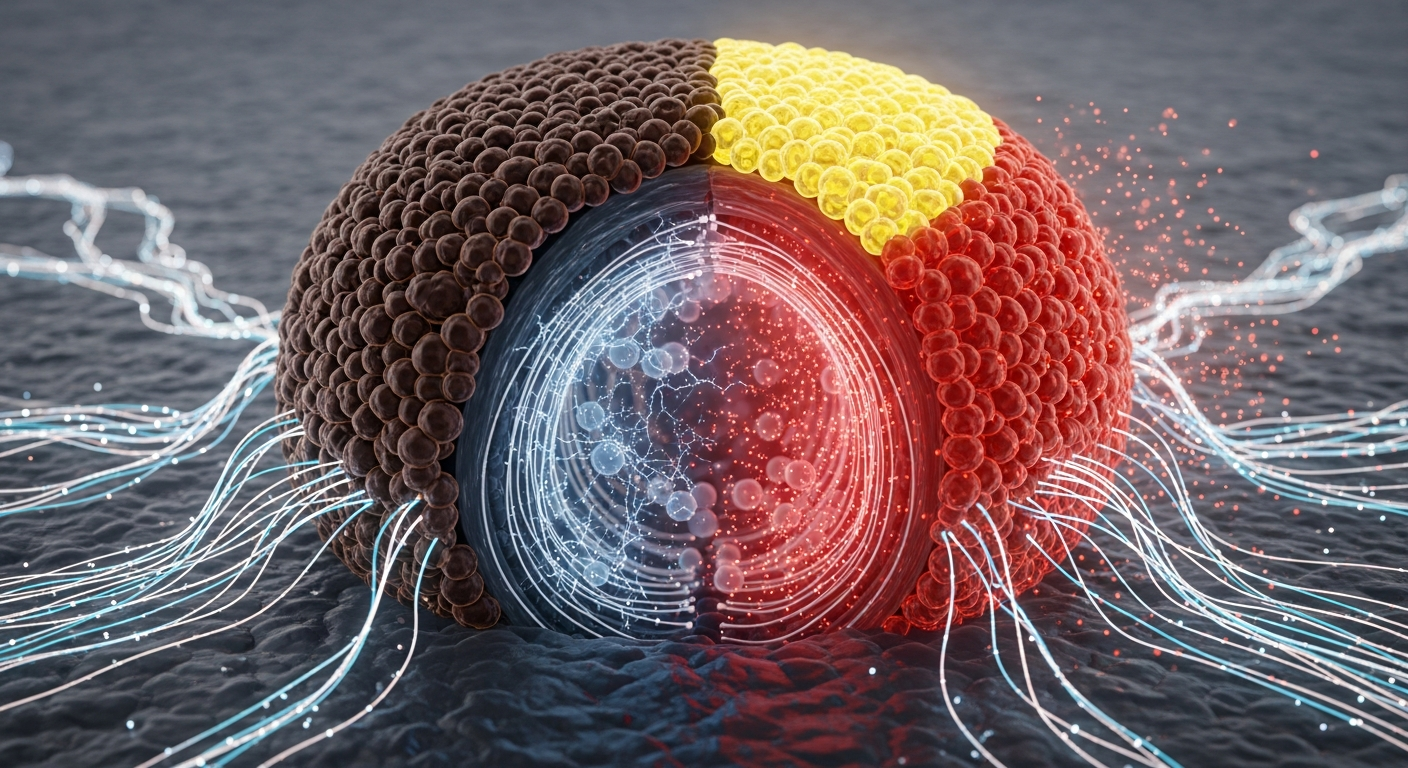
This article explores a speculative but scientifically grounded hypothesis: that variations in the bioelectric and semiconducting properties of melanin, which differ across human populations, could be a contributing biophysical factor to observed disparities in disease susceptibility and treatment response.
What if one of the most visible and variable human pigments is also a key player in a hidden layer of biological information? We have long understood that melanin governs the color of our skin, hair, and eyes, and that its primary role is photoprotection. Yet, decades of research in biophysics have revealed a far more complex and active role for this ancient biopolymer. Melanin is not an inert pigment. It is a functional, bioelectric material with properties that straddle the line between classical and quantum physics. This leads to a profound and provocative question: What if subtle, genetically determined variations in the electrical signature of an individual’s melanin create a systemic bias in cellular function, contributing to population-level differences in health outcomes?
This is not a search for a simplistic biological determinant. Health disparities are a profoundly complex issue, with socioeconomic factors, systemic inequities, and environmental exposures playing dominant roles. However, as we seek a complete picture, we must not overlook the possibility that biophysical diversity at the cellular level could be a contributing factor—a missing variable in our models of disease risk and resilience.
The Science We Know
To explore this hypothesis, we must first ground ourselves in established, peer-reviewed science. The premise rests on four pillars of well-documented research: the diversity of melanin, its semiconductor properties, the primacy of bioelectricity in cellular control, and the link between melanin types and health risks.
First, melanin is not a single substance. It is a family of polymers, with the two most common forms in humans being eumelanin and pheomelanin. Eumelanin, a dark brown-black polymer, is an exceptional photoprotectant, capable of absorbing over 99.9% of incident UV radiation and dissipating that energy harmlessly as heat. Pheomelanin, a reddish-yellow polymer containing sulfur, is a far less effective photoprotectant. Critically, upon UV exposure, pheomelanin can generate reactive oxygen species (ROS)—unstable molecules that cause oxidative stress and damage to DNA and other cellular components. The ratio of eumelanin to pheomelanin is genetically controlled (the MC1R gene is a key regulator) and varies significantly among individuals and populations, defining not just pigmentation but the skin’s intrinsic vulnerability to UV-induced damage.
Second, melanin is an amorphous organic semiconductor. Landmark research dating back to the 1970s by physicists like John McGinness demonstrated that melanin can absorb photons (light) and convert that energy into electrons and "holes" (the absence of an electron), much like silicon in a solar panel. It possesses a characteristic energy band gap of approximately 1.6-1.9 electron volts (eV), which allows it to conduct electricity under certain conditions. This conductivity is not static; it is highly dependent on its hydration state, meaning its electrical properties are coupled to its cellular water environment. Melanin is also a stable free radical, meaning it has an unpaired electron, which makes it highly reactive and capable of participating in a wide range of redox reactions—the fundamental chemical exchanges that power cellular life.
Third, bioelectricity is a fundamental regulator of biology. The work of researchers like Michael Levin at Tufts University has demonstrated that cells and tissues use electrical signals to direct growth, healing, and morphogenesis. Every cell maintains a voltage gradient across its membrane, known as the transmembrane potential (Vmem). Patterns of Vmem across a tissue form a bioelectric pre-pattern that instructs cells on what to build and where. Disrupt these electrical patterns, and you can induce profound changes, such as triggering the growth of an eye on a tadpole’s tail or normalizing cancerous cells. This cellular communication via ion flows and voltage gradients is an ancient and powerful form of biological computation.
Finally, we know there are established correlations between melanin type and specific health conditions beyond skin cancer. For instance, neuromelanin, a variant found in the brain's substantia nigra, binds to iron and other metals. Its degradation in Parkinson's disease releases these toxic metals, contributing to neuronal death. The higher prevalence of pheomelanin has been linked not only to melanoma but potentially to other conditions involving oxidative stress.
The Possibility
Here is where we move from established fact to reasoned speculation. If we connect these four pillars, a new framework emerges.
-
If an individual's eumelanin-to-pheomelanin ratio is genetically determined;
-
And if eumelanin and pheomelanin have distinct electrochemical properties (e.g., different redox potentials, different responses to absorbed energy);
-
And if cells rely on a precise bioelectric milieu for normal function, healing, and disease resistance;
-
Then it is plausible that variations in a person's systemic melanin composition could subtly alter this bioelectric milieu, creating different baseline conditions for cellular health.
Consider the cellular environment as a complex circuit board. The bioelectric signals are the information flowing through the circuits, telling cells how to behave. Melanin, present not just in skin but in the inner ear, the brain, and the eye, acts like a unique electronic component integrated into this board. A eumelanin-dominant system might function like a component that is excellent at dissipating excess energy (surge protection), maintaining electrical stability. A pheomelanin-dominant system might be a more "noisy" component, one that is more likely to generate stray electrical signals (oxidative stress) when bombarded with energy from metabolic processes or environmental toxins.
This "bioelectric bias" would not cause disease on its own. Instead, it could lower the threshold for dysfunction. For a population with a melanin profile that tends toward greater electrochemical reactivity, the cellular system might be closer to a tipping point. Exposure to the same environmental toxin, pathogen, or metabolic stressor that a different system could handle might be enough to push this more reactive system into a pathological state. This could manifest as increased susceptibility to inflammatory diseases, differential response to drugs that have redox activity, or varied resilience to environmental exposures. This framework suggests that melanin isn't just a passive shield, but an active electrical modulator of the cellular environment.
Challenges and Unknowns
This hypothesis, while compelling, is fraught with challenges and resides firmly in the realm of frontier science. Credibility demands we acknowledge the significant hurdles.
The primary obstacle is measurement. How can we non-invasively measure the in vivo electrical properties of melanin within a living human? Current techniques can characterize isolated melanin granules, but this tells us little about their function within the dynamic, hydrated, and complex matrix of a cell. Developing probes or imaging techniques to map these properties at a cellular level is a monumental technological challenge.
Furthermore, causality is notoriously difficult to prove. Health disparities are a classic example of a multifactorial problem. Isolating a subtle biophysical variable like melanin's electrical signature from the overwhelming influence of social determinants of health, access to care, genetics, and diet is a massive analytical undertaking. Any observed correlation could be an artifact of other, more dominant factors.
Finally, the mechanism of transduction remains unclear. How exactly would the localized electrical behavior of melanin in a melanocyte, a neuron, or an inner-ear cell translate into a systemic health outcome? We lack a clear understanding of the pathways that would connect, for instance, a melanocyte's redox state to the function of the immune system or the liver. Bridging this gap from the molecular to the systemic level requires a new synthesis of biophysics, cell biology, and immunology.
The Path Forward
Advancing this hypothesis from speculation to testable science requires a dedicated, multi-pronged research program.
-
Advanced Characterization: The first step is to build a comprehensive "electrical profile" of different melanin types. This involves using advanced techniques like electrochemical impedance spectroscopy and transient absorption spectroscopy on lab-grown melanin polymers with varying, controlled eumelanin-to-pheomelanin ratios.
-
Cellular and Organoid Models: Researchers must move beyond isolated melanin. The next step is to use 3D skin organoids or co-culture systems where melanocytes with different genetic profiles (e.g., from donors with different MC1R variants) are integrated with keratinocytes and immune cells. By exposing these models to stressors like UV light, toxins, or pathogens, we can measure resulting changes in Vmem, ion channel activity, and ROS production to see if a bioelectric differential truly exists.
-
Genomic and Epidemiological Correlation: Large-scale biobanks that link genomic data with detailed clinical histories are invaluable. Researchers could perform genome-wide association studies (GWAS) that specifically look for correlations between genes controlling melanin synthesis and susceptibility to diseases involving oxidative stress or inflammation, while carefully controlling for socioeconomic and ancestral confounders.
-
Interdisciplinary Synthesis: No single field can answer this question. Progress depends on radical collaboration between quantum biologists, biophysicists, geneticists, epidemiologists, and public health experts. We must develop shared models that can integrate biophysical data with the complex realities of human health.
Exploring melanin's bioelectric dimension is not about creating new biological categories or justifications for inequality. It is the opposite. It is about striving for a higher-resolution understanding of human diversity to pave the way for a more personalized and equitable form of medicine, one that recognizes that our biology is as varied and complex as our lived experiences.
Key Takeaways
- Melanin is not a single, inert pigment but a family of functional biopolymers, primarily eumelanin (photoprotective) and pheomelanin (photosensitizing), with ratios that vary across populations.
- Established research confirms that melanin is an organic semiconductor, capable of absorbing energy and influencing the electrical and chemical environment of the cell.
- Bioelectric signals, such as the transmembrane potential (Vmem), are a fundamental layer of biological information that controls cell behavior, growth, and healing.
- A speculative but plausible hypothesis is that genetically-determined variations in melanin's bioelectric properties could create a systemic bias in cellular function, potentially contributing to population-level differences in disease susceptibility.
- Proving this hypothesis is challenging, requiring new technologies to measure in vivo bioelectric properties and sophisticated models to disentangle biophysical factors from social and environmental determinants of health.
- Future research should focus on characterizing melanin's electrical profile, utilizing advanced cellular models, and correlating genomic data with clinical outcomes to explore this potential link.
References
- Meredith, P., & Sarna, T. "The physical and chemical properties of eumelanin." Pigment Cell Research 19(6), 572-594 (2006). DOI: 10.1111/j.1600-0749.2006.00345.x doi:10.1111/j.1600-0749.2006.00345.x
- McGinness, J., Corry, P., & Proctor, P. "Amorphous semiconductor switching in melanins." Science 183(4127), 853-855 (1974). DOI: 10.1126/science.183.4127.853 doi:10.1126/science.183.4127.853
- Levin, M., Pezzulo, G., & Fiston-Lavier, J. "The Taming of the Shrew: The Memo-ry and Computation of Embryonic Tissues." Journal of the Royal Society Interface 14(132), 20170155 (2017). DOI: 10.1098/rsif.2017.0155
- Mostert, A. B., Barden, J., & Powell, B. J. "The band gap of eumelanin." Science Advances 8(17), eabm8046 (2022). DOI: 10.1126/sciadv.abm8046
- Simon, J. D., Peles, D., Wakamatsu, K., & Ito, S. "Current challenges in understanding the structure of eumelanin." Accounts of Chemical Research 41(2), 198-206 (2008). DOI: 10.1021/ar700148d
- Ito, S., & Wakamatsu, K. "Diversity of human hair pigmentation as studied by chemical analysis of eumelanin and pheomelanin." Journal of the European Academy of Dermatology and Venereology 25(12), 1369-1380 (2011). DOI: 10.1111/j.1468-3083.2011.04278.x doi:10.1111/j.1468-3083.2011.04278.x
- Turick, C. E., Ekechukwu, A. A., Milliken, C. E., Casadevall, A., & Dadachova, E. "Gamma radiation interacts with melanin to alter its oxidation–reduction potential and results in electric current production." Bioelectrochemistry 82(1), 69-73 (2011). DOI: 10.1016/j.bioelechem.2011.04.009 doi:10.1016/j.bioelechem.2011.04.009
- Levin, M. "Bioelectric signaling: Reprogrammable circuits underlying anatomical patterning." Cell 156(5), 875-875 (2014). Note: This is a correspondence/commentary summarizing the field. A more detailed review like Levin, M. (2021) "Bioelectric domains: a new source of pattern-forming information" in Current Opinion in Genetics & Development is also suitable.